Affordable sedan guide2 minutes 32 seconds
A strong model reputation starts the search. Learn what reliability ratings and repair-cost averages can tell you, and how to compare the actual SUV through its configuration, service records and immediate ownership needs.
You find two used SUVs with the same badge and similar mileage. One has clear service records and recently completed maintenance. The other has unanswered questions about what comes next. A model reliability score cannot tell you which of those two you are buying. That distinction matters when shopping below $20,000.
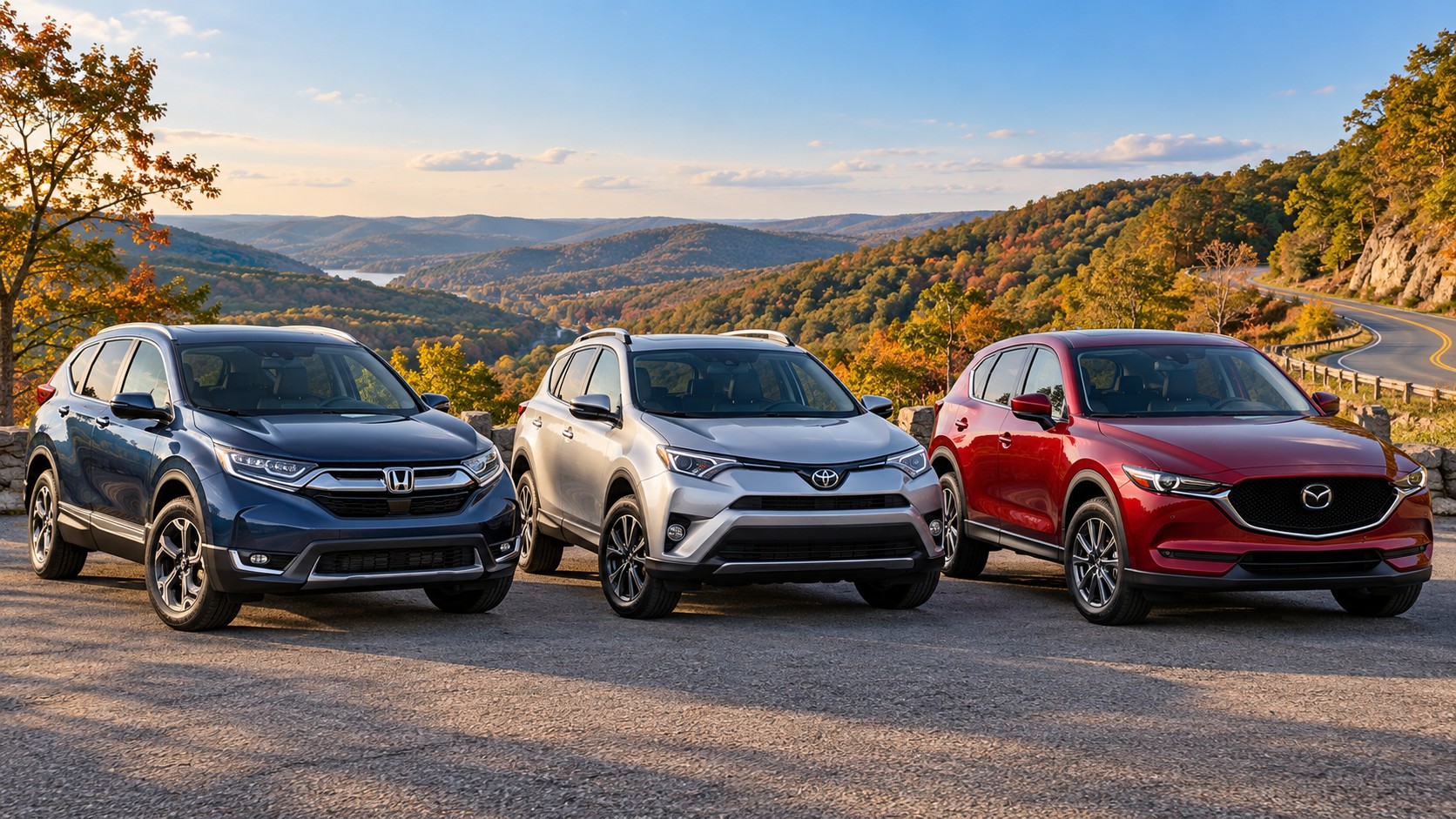
The Honda CR-V, Mazda CX-5, and Toyota RAV4 are useful compact candidates. RepairPal gives the first two ratings of 4.5 out of 5. Toyota’s compact SUV earns a rating of 4 out of 5. Those ratings combine model wide data. They do not establish that every year or engine carries the same risk.
RepairPal lists annual averages of $407 for the Honda CR-V and $447 for the Mazda CX-5. That $40 gap is much smaller than many individual service needs. These are historical averages across model years, not spending limits or quotes for a specific vehicle.
Identify the year, engine, and drivetrain before using any specifications or maintenance information. A gasoline Toyota RAV4 is a different comparison from a hybrid. The Toyota Highlander belongs in the search when extra seating is useful, but its larger size brings a different ownership proposition. Compare like with like wherever possible.
Review the maintenance already completed and the next scheduled work. Look at tire age and condition, fluid service, warning lights, and documentation of prior repairs. Ask the selling dealership to explain its condition report and completed reconditioning. Clear answers help turn a promising model into a specific vehicle you can evaluate.
Add known immediate service needs to the complete purchase price. Keep a separate reserve for later maintenance and unexpected repairs. A slightly higher priced example with documented recent work may deserve a place beside a cheaper one. Do not assume a lower odometer reading automatically makes up for gaps in the history.
Use reliability data to narrow your search, then compare the actual vehicles and their records. The best candidate is the one whose configuration, condition, and price make sense together. A good reputation earns attention. The specific SUV earns the purchase.